9 video lessons
Progressive videos that reteach the skill of acting without guaranteed outcomes, plus prompt walkthroughs for each level.
 Tiny Risks MethodSign in
9 video lessons. 3 levels of risks to try. Free.
This free course rebuilds one specific skill: acting when you can't predict how it'll go. Most adults lose this skill by their mid-twenties and never get it back. This course gets it back — without a trip to Bali and without making your family concerned for you. You can still keep your job, your place, your friends, and everything else you've built. We will start with risks so embarrassingly small that your brain will barely notice, and then we'll gradually take bigger ones until the stuff you filed under “maybe someday” starts actually happening.
Your brain has one job: keep you alive while burning as little energy as possible. So anything you do repeatedly becomes a pattern it runs without thinking — your route to work, what you order, what you say yes to, whether you speak up when you have something to say.
That works super great… until it automates your entire life. When every day runs the same script on repeat, your brain has no reason to record any of it. You can't remember last week because it looked identical to the week before.
“I'm successful but dead inside! :)”
See, as a kid, you tried things constantly without knowing how they'd go — you climbed stuff, talked to strangers, wore baffling outfits to school — and the world felt full of exciting pathways to choose from. That ability is a skill, and skills fade when you stop using them — just like if you played piano for ten years and then stopped, you'd lose it. But no single moment lost you the skill. You just picked the safer, more efficient action a few thousand times in a row, and at some point your brain quit suggesting there was any other option.
“I used to be a risk-taker. 50+ countries, lived in 5. Known as an adventurer. Now I've become complacent.”
“I have a family. I have a career. I can't do anything big anymore. My world has narrowed from age 21 to now.”
You are what you repeatedly do.
Run the same comfortable routine long enough and it starts running you.
Adult life filters every decision to act through one main question: “do I have to?”
Paying the mortgage or rent? Yes. Seeing the dentist? Yes. The trip you keep talking about, the thing you want to publish, and the conversation you keep rehearsing in the shower? Nope! There's nothing forcing you to do those. So they continue to pile up in the back of your mind, indefinitely.
Maybe your whole life feels like this cycle of not taking the risk. Or maybe it's one specific thing you've been circling for months and can't quite take action on. Both require the same skill, the same fix.
A Tiny Risk beats that “do I have to?” filter by being too small to even trigger it. Sending a text. Publishing a rough draft. Speaking up in a meeting. Ordering something different. They are actions with just a touch of downside — small enough that your brain can't talk you out of them, but real enough that something actually happens.
“After each task, I wondered to myself why I had put them off for so long. Many of the tasks were quick and didn't take much time out of my day, yet I let myself get anxiety over not completing them for months.”
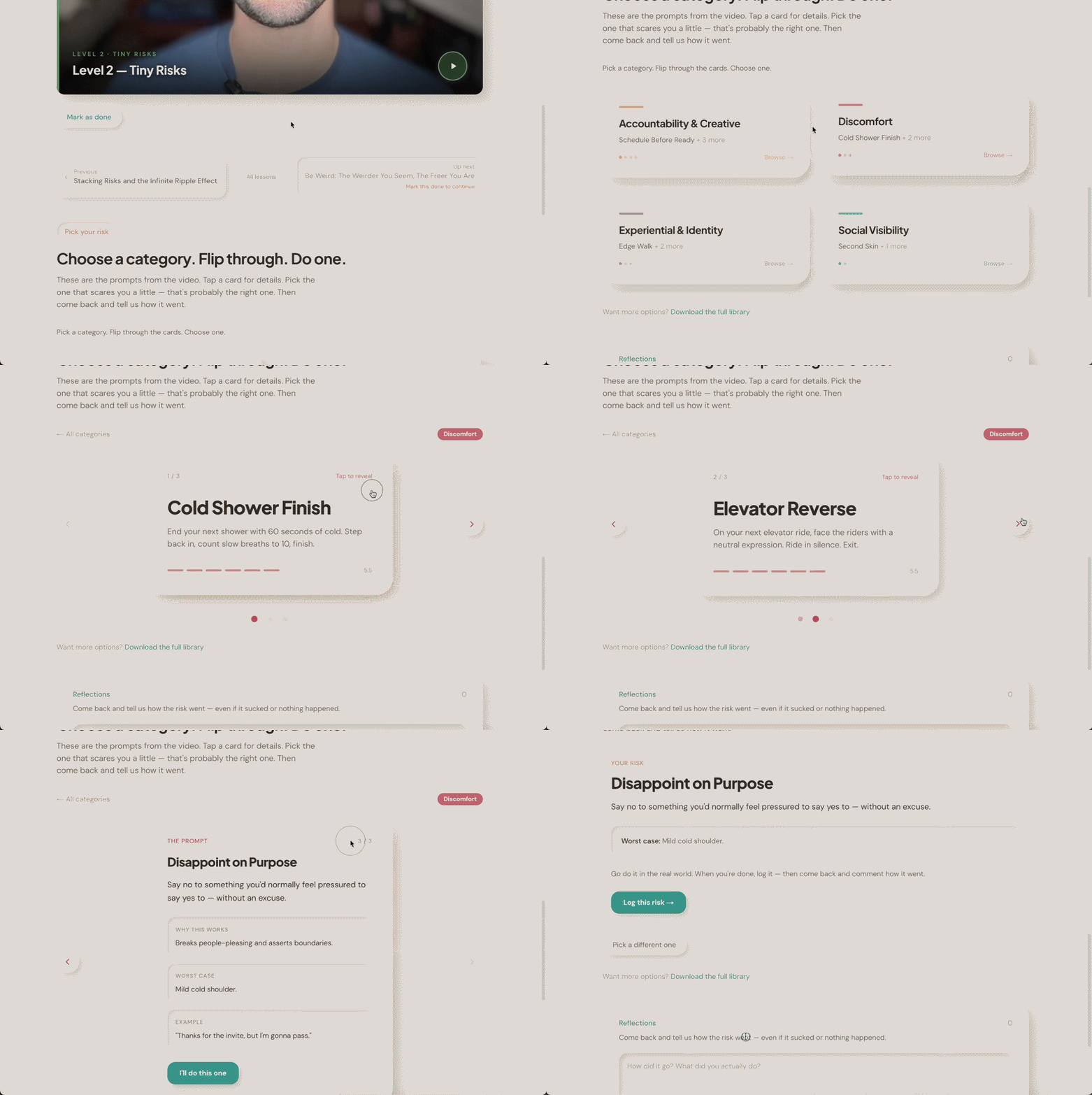
Each one you complete teaches your nervous system that acting without certainty won't destroy your life. Stack enough reps and your hesitation shrinks. You stop waiting for permission that was never coming, and acting becomes the default mode again — which puts you in a strange minority: most people around you can't do this anymore. Watch them sometime. They defer, they research, they wait for the safer option. You'll be the one who just… does it.
“Now I think to myself: 'let's do it' — if even the smallest part of me wants to.”
“This challenge provided me with the motivation to take action on what was previously just thought of as 'it would be cool to do this someday.' It's 'someday' now.”
“I simply texted people to make plans I had been putting off. Getting coffee with a friend... dinner for friends next week... road trip planned. The switch to just do it turned back on after being on autopilot.”
“Sometimes things are so monotonous and it's like the gears have grinded to a halt, and I feel like these tiny risks just drop a couple drops of oil on there and it starts spinning the gears again.”
“I just got back from Chicago. I hit the town. I went out at night with a new attitude. I made hella friends. I went out completely alone. I don't know if the Melissa from 4 weeks ago before this would have been able to do that.”
“Before this I almost certainly wouldn't have done it at all. And my stomach would have been in knots clicking that 'book' button. When I actually did it on Day 7, my mindset had shifted so drastically that it felt like a perfectly natural thing to do.”
“There was something about naming a risk and doing it anyway, even if it was small, that reminded me how brave I already am.”
“I sent a first batch of rate-raising emails, a task that I had been postponing for too long!”
“The most important thing has been to start being myself again.”
I would have never sent that email before this.
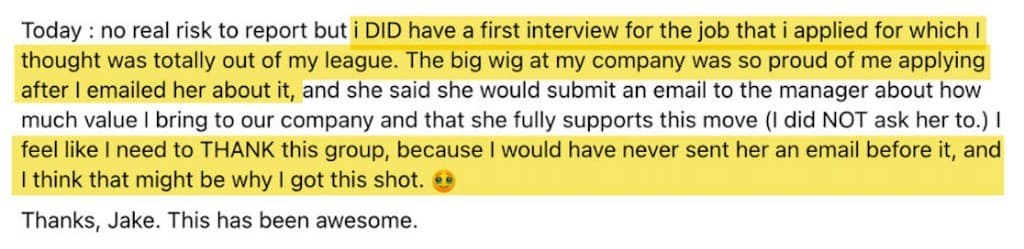
Doing this felt impossible before Tiny Risks.

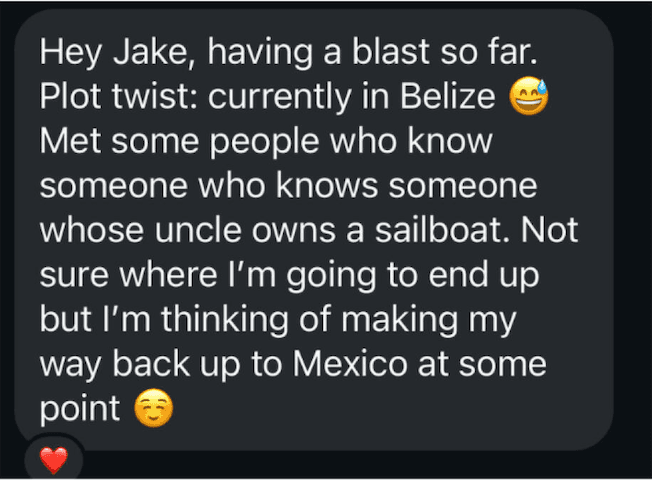
Plot twist: currently in Belize.
I'd say it's going well.
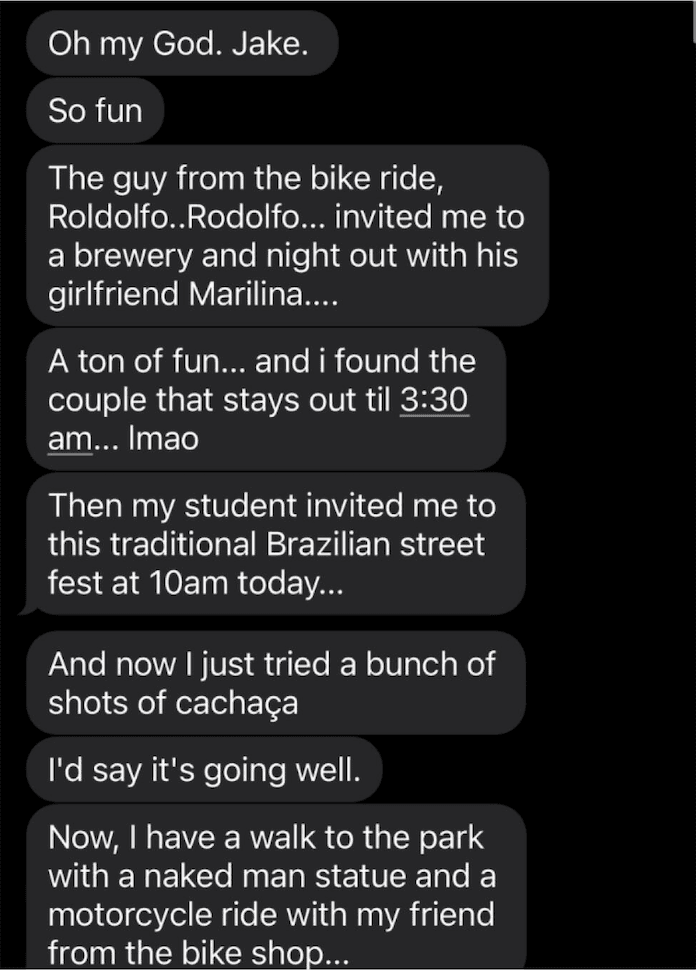
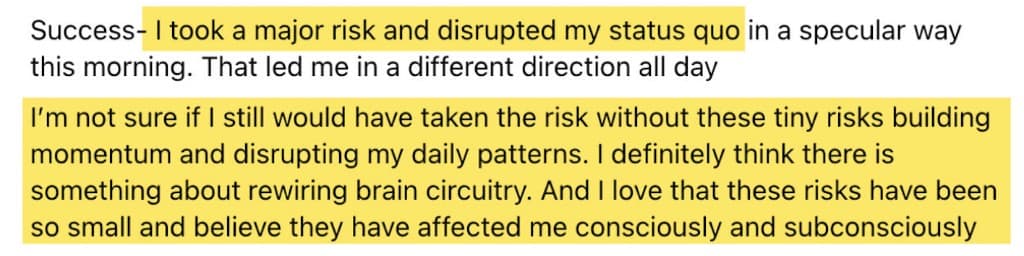
Something about rewiring brain circuitry.
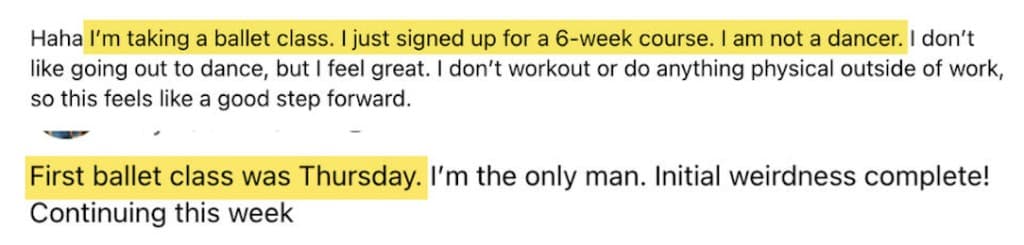
I'm the only man in the class. Initial weirdness complete!
Flights purchased. I think you're definitely onto something.

It took me several hours to write that message, and I sent it.

I can start doing more things without overthinking.
The action steps — instead of just learning about it — is what's helpful.
If you put the word "tiny" in front of it, then it seems doable.
This is not another course you nod along with and promptly forget. The videos explain why you got stuck in the first place and how to snap out of it on-demand. Everything else exists so you can act — take a small uncomfortable action, log what happened, see what everyone else tried.
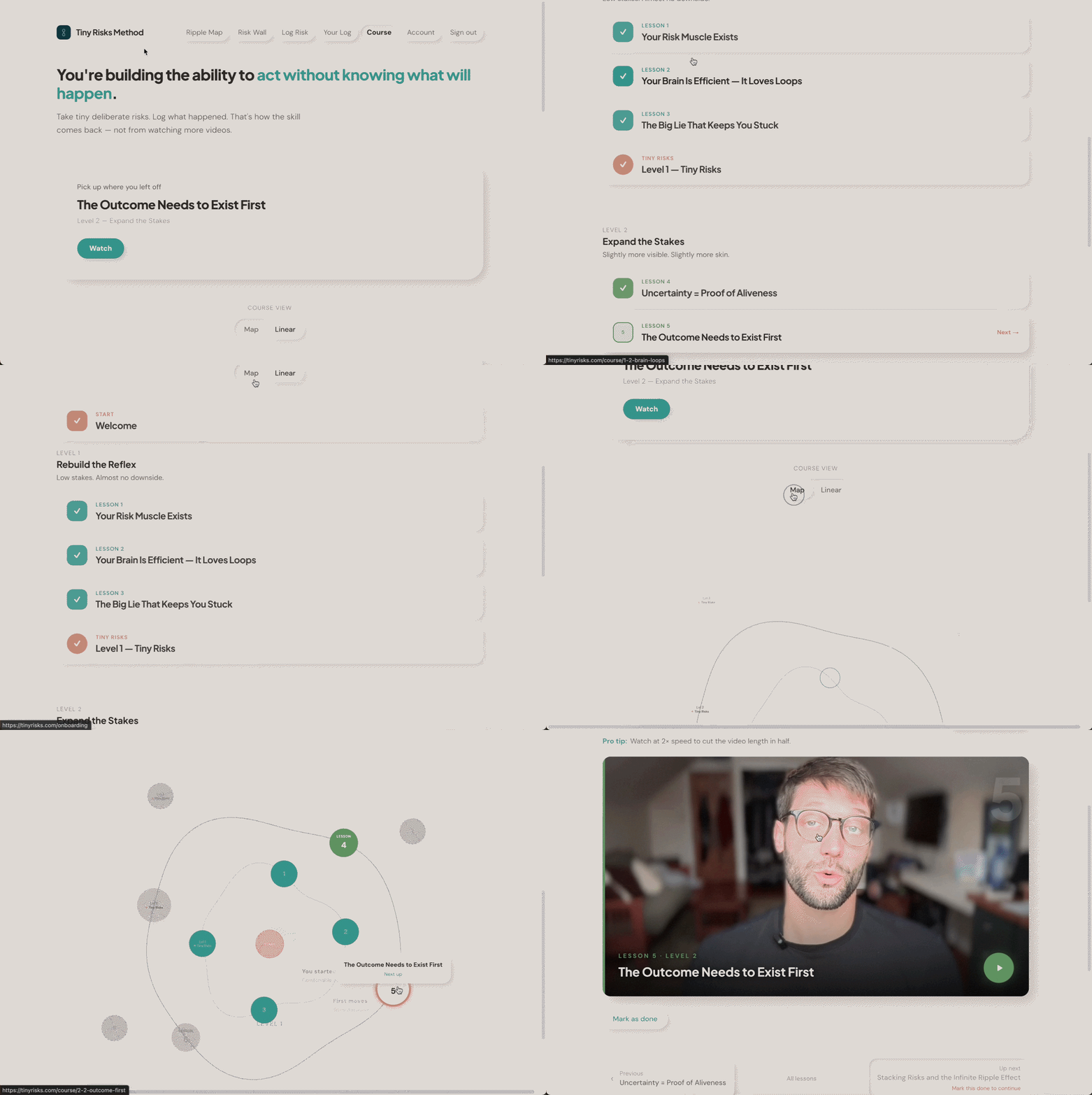
Progressive videos that reteach the skill of acting without guaranteed outcomes, plus prompt walkthroughs for each level.
Escalating stakes, from almost-nothing-can-go-wrong prompts to going rogue with your own ideas.
Ten curated risks per level, plus the full library whenever you need more options.
Log what you did by text, voice, or video. A running record of things you did. Proof that you're causing your days to happen.
A feed of risks other members took and what happened next. Proof this works on regular people with regular lives.
A ripple map of the outcomes from all the risks taken during the course (and beyond it).
“The biggest thing is having someone else invested in what you do.”
Low-stakes risks where almost nothing can go wrong. You're reminding your brain that acting under mild uncertainty won't wreck your life.
The risks get more visible. Other people can see you and react to you. Real outcomes start showing up in your week — sent emails, hard conversations, things that sat in your head for months and now exist in the world.
Bigger swings. By the end, you stop needing prompts and start running with your own ideas.
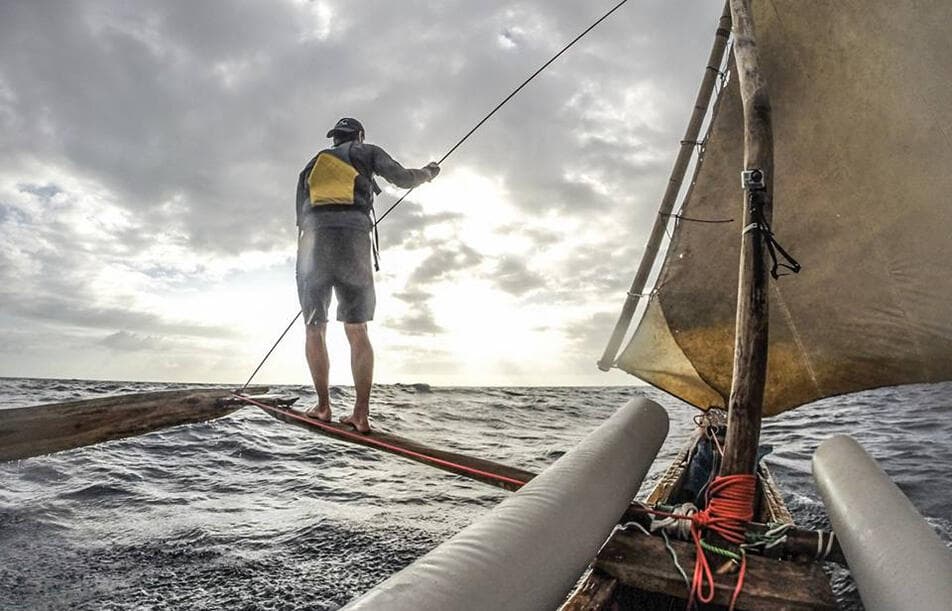
Here's the short version of the story: I spent my twenties taking big swings at weird ideas — built a treehouse in South Africa, raced a hollowed-out mango tree down the coast of Tanzania, wrote music, published projects online that sometimes worked and sometimes flopped terribly. Either way, life was novel and interesting. I was causing it. It wasn't happening TO me.
Then I spent my late twenties and early thirties doing what seemed like the responsible move and optimized for a “good life”. When I felt numb or stuck, I bought self-help books to try and fix the feeling. None of it changed anything in my day-to-day life. I just gained a more sophisticated understanding of why I was the way I was.
Then I had three strokes in seven days at age thirty. Healthy, active, no family history. The doctors were confused (and still are!). But I'm not confused. I know it had everything to do with the stress of living a singular pathway that was incongruent with what I actually wanted to do with my life.
Here's what I figured out afterward, mostly by accident: I'd been treating this as an information problem, but it was a skill problem — the same skill I had in my twenties and stopped using because building a “good life” means the removal of risk. Once I started using the skill again in small doses, my world opened back up fast. Life started happening because of me instead of to me.
“I want to get myself into gear without requiring a major crisis first.”
This course is what I wish someone had handed me before the strokes. But the only part that matters is whether you do the risks. Watching videos and feeling briefly motivated will change nothing — you already know that, because we've all done it before.
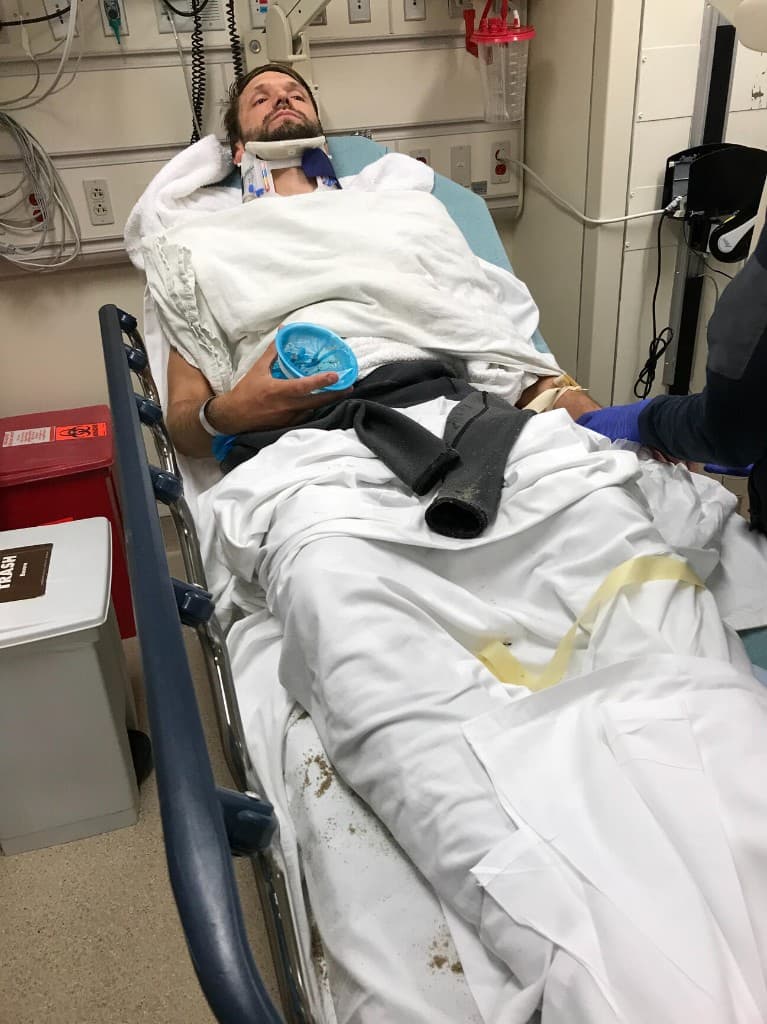
Acting under uncertainty — in a world that shoves comfort down your throat every day — is the skill most people have lost. This course re-teaches it.
Hell, it's free. There's literally zero risk.
Drop your email and I'll send you the course.